Make the Crossing Part of the Day
Treat the ferry slipway as an oasis rather than an obstacle. By treating crossings as built-in pauses, you transform mandatory transit into restorative travel time.
In western coastal corridors, the highway terminates at the waterline. For over a century, double-ended ferry shuttles have connected remote peninsulas. For the traveller, this mandatory break provides something rare in modern road trips: twenty minutes where you are completely free from steering, gear shifts, and lane discipline.
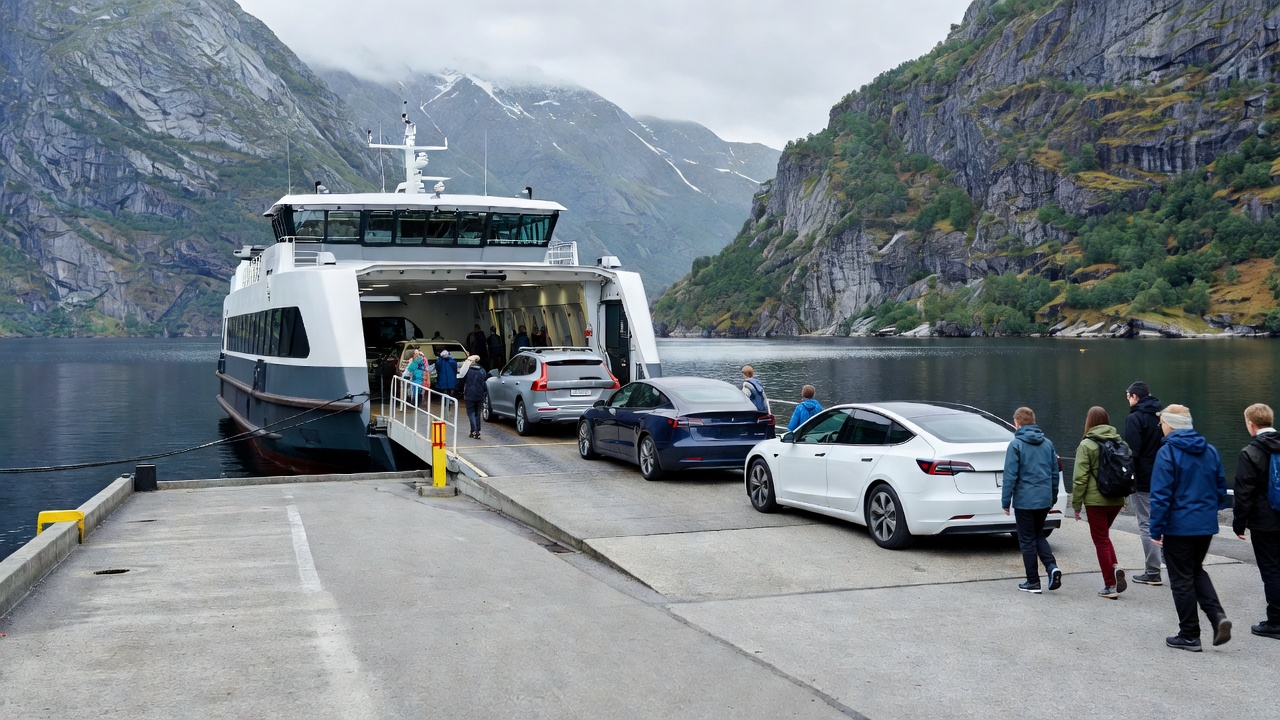
Understanding the Two Operational Models
| Transit Category | Typical Routes | Reservation Required? | How to Pay |
|---|---|---|---|
| Highway Shuttles | E39 crossings (e.g. Lavik–Oppedal, Anda–Lote) | No. First in line, first aboard. | AutoPASS transponder, FerryPay, or license plate invoice |
| Scenic Branch Legs | Geiranger–Hellesylt, Gudvangen–Flåm | Yes, essential from June to September. | Online advance ticket with specific vehicle slot |
| Island Outpost Links | Outer archipelago community loops | Occasionally by phone on low-demand hours. | Onboard conductor or regional transit card |
Step-by-Step Slipway Etiquette
Approaching a ferry terminal is calm when you know the standard sequence:
The Slipway Protocol
- Select your queue lane: Terminals feature numbered lanes on tarmac. Fill Lane 1 first; if full, move sequentially to Lane 2. Do not straddle lane dividers.
- Engine shutdown: In line, turn off vehicle engines immediately. Do not sit idling with cabin air conditioning blowing exhaust toward open windows behind you.
- Marshaled boarding: Follow the deck officer’s hand signals strictly. They balance vessel weight distribution; obey instructions to pack close to the vehicle ahead.
- Set handbrake in gear: Once parked, pull the handbrake hard and engage first gear (or Park). Ferry vibration on choppy waters can shift rolling gear.
- Head up to the saloon: Disembark your vehicle, head up the interior stairwell, and enjoy fresh waffles and the open breeze on the top deck.
Electric Propulsion and Quiet Crossings
Modern battery-electric ferries are progressively replacing legacy diesel vessels. Their near-silent passage allows you to hear the sound of waterfalls dropping into the salt water hundreds of metres away. Respect this quietude: keep mobile calls brief and take in the natural surroundings.